
Embarking on a whole-home remodel is one of the most significant investments you can make in your property. It’s a chance to completely reshape your living space, tailor it to your lifestyle, and dramatically increase its value. For homeowners on Seattle’s Eastside, from the waterfront properties of Mercer Island to the family-focused communities of Sammamish, the first question is always the same: “What will it actually cost?” The answer is complex, with dozens of variables influencing the final number.
This guide is designed to bring clarity to that question. We will break down the typical investment range for a comprehensive whole-home remodel, explore the key factors that drive the budget up or down, and provide a transparent look at where your money goes. By the end, you’ll have a much clearer picture of what to expect when planning your transformative project.
Establishing a Baseline: Typical Whole Home Remodel Costs on the Eastside
On the Eastside, a region known for its high property values and quality of life, a full-scale home renovation is a substantial undertaking. While every project is unique, most comprehensive whole-home remodels in areas like Bellevue, Redmond, and Issaquah fall within a general range.
A typical whole-home remodel on the Eastside costs between $250,000 and $500,000+.
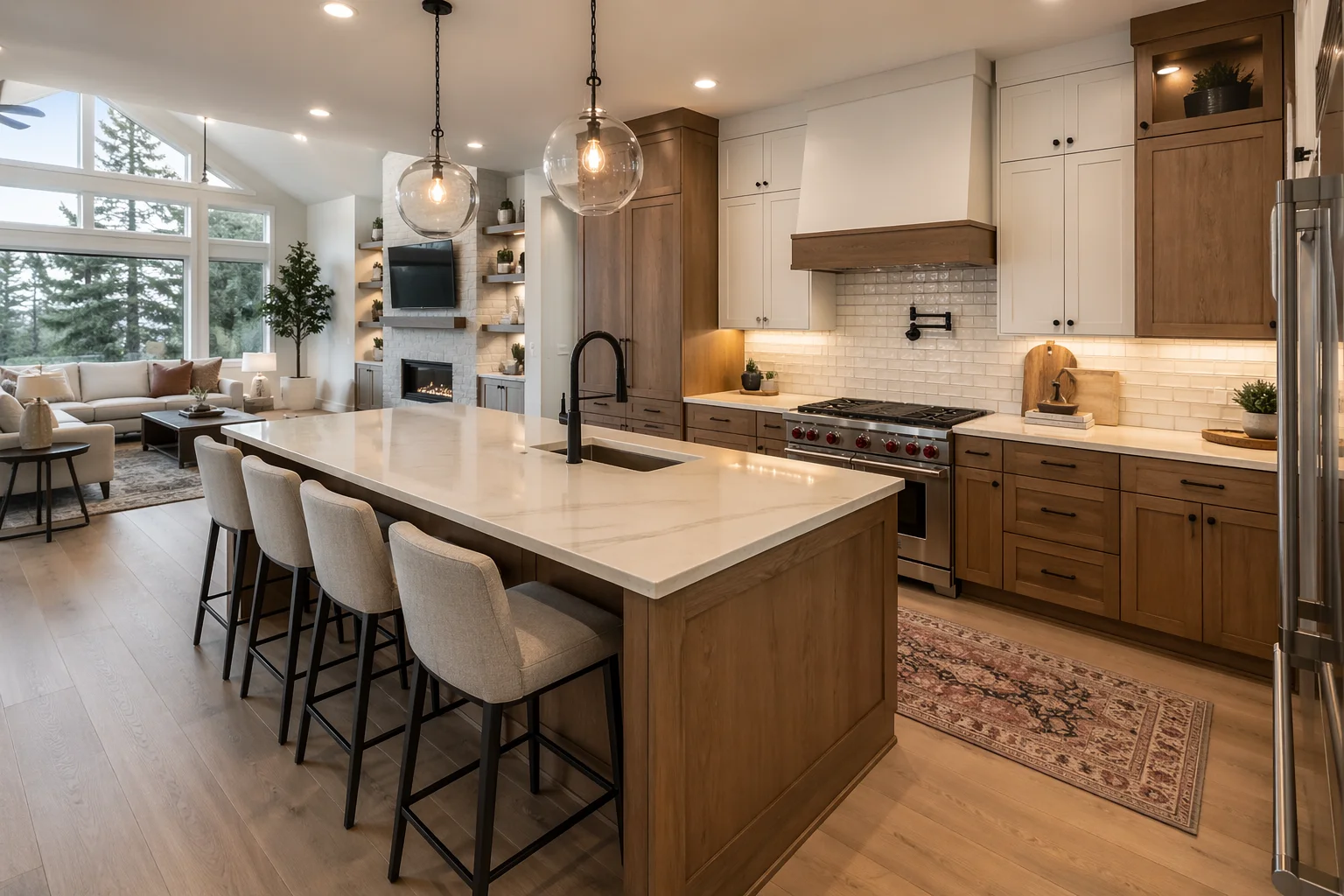
This range generally covers significant updates to the most impactful areas of a home, such as a full kitchen renovation, two to three bathroom remodels, new flooring throughout, a full interior repaint, updated lighting, and new trim work. However, this is just a starting point. Projects that involve luxury estate transformations, major structural reconfigurations, or home additions can easily exceed $750,000 or more. Understanding what pushes a project to the lower or higher end of this spectrum is crucial for realistic budgeting.
The 5 Major Factors That Drive Your Remodeling Budget
Your final investment is a direct result of the decisions you make. While hundreds of small choices add up, the total cost is primarily shaped by five major categories. Let’s explore each one in detail.
1. The Scale and Scope of Work
The most significant cost driver is the sheer scope of your project. Are you planning a cosmetic overhaul or a down-to-the-studs transformation?
- Cosmetic vs. Gut Renovation: A cosmetic update might involve painting, refinishing floors, replacing light fixtures, and swapping out countertops. A full gut renovation, however, means removing drywall, reconfiguring layouts, and replacing all systems like plumbing and electrical. The labor and material costs for a gut renovation are exponentially higher.
- Square Footage: The size of your home directly impacts material quantities and labor hours. A 4,000-square-foot home in Sammamish will naturally cost more to remodel than a 2,000-square-foot home in Bothell, assuming the level of finishes is the same.
- Additions: If your remodel includes adding square footage, such as a primary suite addition or a second-story pop-top, your costs will increase significantly. This involves foundation work, framing, roofing, and integrating
2. Structural Changes and Layout Reconfiguration
Do you dream of an open-concept living area in your 1980s home? Removing walls is one of the most common requests, but it comes with a hefty price tag.
Structural modifications are complex and expensive. They require:
- Engineering Assessments: A structural engineer must determine which walls are load-bearing and design a plan to support the structure after removal, usually with a large beam.
- Complex Permitting: Cities across the Eastside have strict building codes. Structural changes require detailed plans and multiple inspections, adding time and cost.
- Extensive Labor: The process involves temporary support structures, careful demolition, installation of heavy beams (like LVL or steel), and then refinishing all adjacent surfaces (drywall, flooring, ceiling) to create a seamless look.
Other structural changes, like adding large new windows, moving a staircase, or raising ceiling heights, follow a similar pattern of increased engineering, permitting, and labor costs.
3. Material Quality and Finish Selections
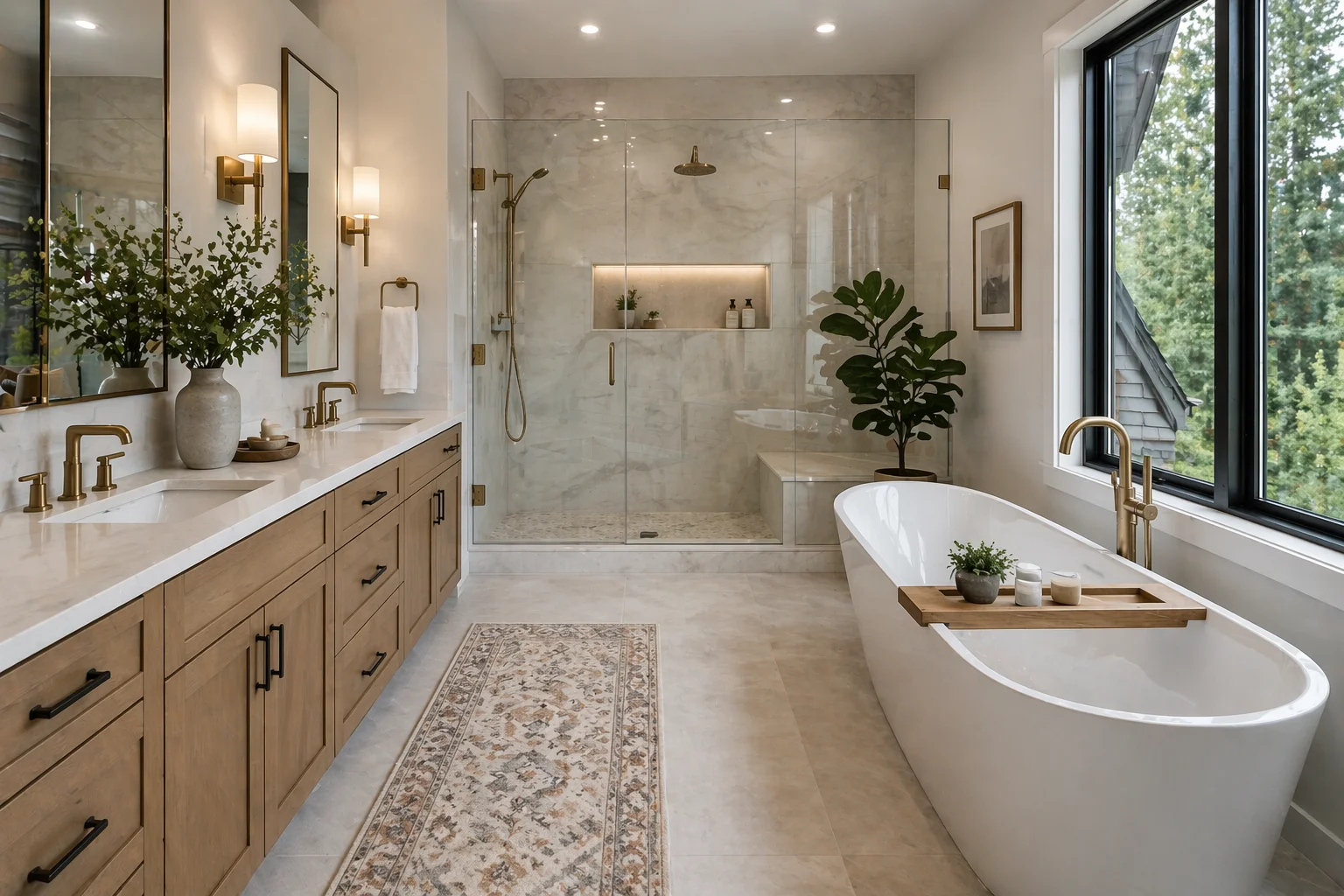
This is the area where you have the most control over your budget. The materials you choose for your cabinets, countertops, flooring, and fixtures can cause dramatic swings in the total cost.
We can categorize finishes into three main tiers:
- Builder-Grade/Value-Oriented: This includes options like stock cabinets, laminate countertops, luxury vinyl plank (LVP) flooring, and basic ceramic tile. These materials are cost-effective and can be a great choice for budget-focused projects or rental properties.
- Mid-Range/High-Quality: This is the most common tier for Eastside remodels. It includes semi-custom cabinetry, quartz countertops, engineered hardwood flooring, and quality porcelain tile. These materials offer an excellent balance of durability, style, and value.
- Luxury/High-End: This tier is for those seeking premium, statement-making finishes. It features fully custom cabinetry, natural stone countertops like quartzite or marble, high-end appliances (think Sub-Zero or Wolf), and handcrafted tiles. These selections represent the top of the market in both quality and price.
A kitchen with luxury appliances and custom cabinets alone can cost more than an entire value-oriented home remodel. Your design-build partner can help guide you toward selections that align with your aesthetic goals and overall budget.
4. The Age and Condition of Your Home
Many homes on the Eastside, particularly in established neighborhoods of Bellevue and Redmond, were built between the 1960s and 1990s. While these homes have great bones, they can also hide expensive surprises.
Opening up walls in an older home can reveal:
- Outdated Electrical Systems: Knob-and-tube wiring or ungrounded circuits that must be brought up to current code for safety.
- Old Plumbing: Galvanized or cast-iron pipes that are corroded and need replacement.
- Hazardous Materials: Asbestos in popcorn ceilings or vinyl flooring, and lead paint are common in homes built before 1980. Abatement is a specialized process that adds to the budget.
- Hidden Damage: Rot or pest damage in the framing that was previously concealed.
A good contractor will anticipate these potential issues and include a contingency fund in the budget to cover them.
5. Design, Permits, and Management Fees
The “soft costs” of a remodel are often overlooked but are essential for a successful project.
These include:
- Design Fees: Charges for the interior designer or architect who creates the plans, renderings, and material selections.
- Permitting Fees: Costs paid to the city for plan review and inspections. These can range from a few thousand to tens of thousands of dollars, depending on the project’s complexity.
- Project Management: The fee for the general contractor who oversees the entire project, managing subcontractors, schedules, budgets, and quality control. This expertise is what ensures a project is completed on time and on budget.
These fees typically account for 15-25% of the total project cost but are invaluable for navigating the complexities of a large-scale renovation.
Conclusion
A whole home remodel is one of the most significant investments you can make, and on the Eastside, where homes hold serious value and quality expectations are high, doing it right matters. The final cost of your project will be shaped by the scope of work, the materials you choose, the condition of your home, and the expertise of the team you hire. There’s no single number that fits every project, but with a clear understanding of these cost drivers and a realistic budget in hand, you’re in a strong position to move forward with confidence.
Why Eastside Kitchen & Bath Is Built for a Project Like This
A whole home remodel is the most complex renovation a homeowner can take on, multiple rooms, multiple trades, months of coordinated work, and hundreds of decisions that all need to come together seamlessly. Who manages that process matters as much as the work itself.
Eastside Kitchen & Bath is a full-service design-build firm with nearly 20 years of experience guiding homeowners through large-scale renovations across Bellevue, Redmond, Sammamish, Kirkland, and the surrounding Eastside communities. Our in-house team handles the entire project, design, material selections, permitting, project management, and skilled installation, under one roof, with one point of contact from start to finish. Our process starts with a thorough consultation where we learn your goals, walk through your space, and build out a clear, detailed estimate.